

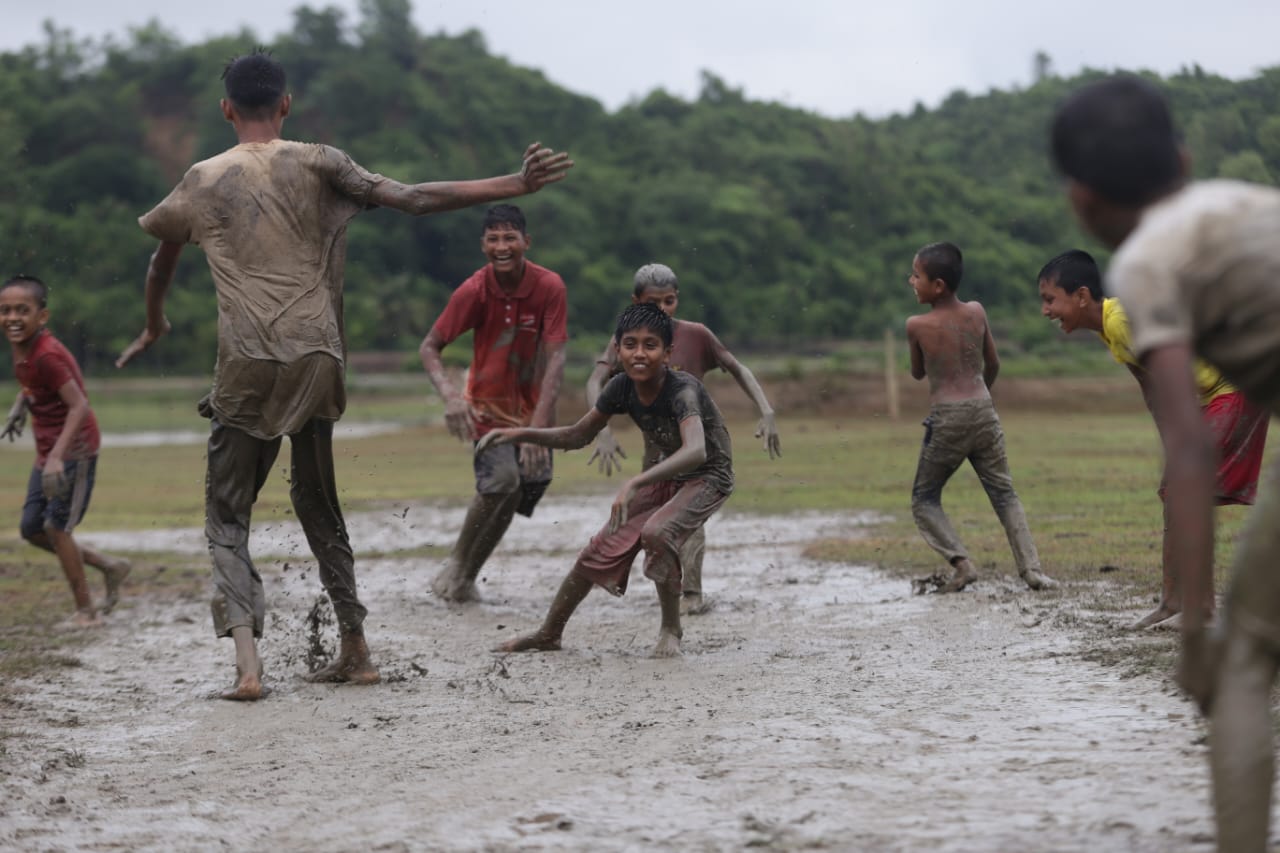
The sky hangs heavy with clouds. A soft drizzle falls in intervals, blending with the earth in the rural courtyard of Ukhiya, Cox’s Bazar. Rainwater seeps into the soil, making the ground thick, sticky mud. But for a group of teenage boys, that mud becomes a canvas—a space where they paint the most accurate pictures of their childhood joy.
In the northern part of Sonarpara, today’s scene is unlike any other. Despite a local signal 3 warning issued along the coast, life moves unbothered. A group of boys is immersed in play in the heart of a muddy field.
Their bodies, smeared in wet soil, speak of pure abandon. Some wear torn sandals, others have no shirts—but their faces beam unfiltered delight. Their laughter and energy outshine even the brightest toys found in city markets.
This is more than a mere game. It’s a deep, instinctive pull—a yearning to return to one’s roots. In Bangladesh’s rural life, mud and rain are age-old companions. Generations have tasted this simple pleasure, from the young to the old.
The boys’ muddy sprints, spirited shouts, and the gentle rhythm of falling rain all come together in a symphony of childhood. It’s a music only the countryside can compose—a melody called the soul of rural Bengal.
Rain doesn’t fall daily, but when it does, the memories made in the mud linger forever in life’s sweetest corners.
By Abdur Rashid Manik
Photo: Hussain Shetu