
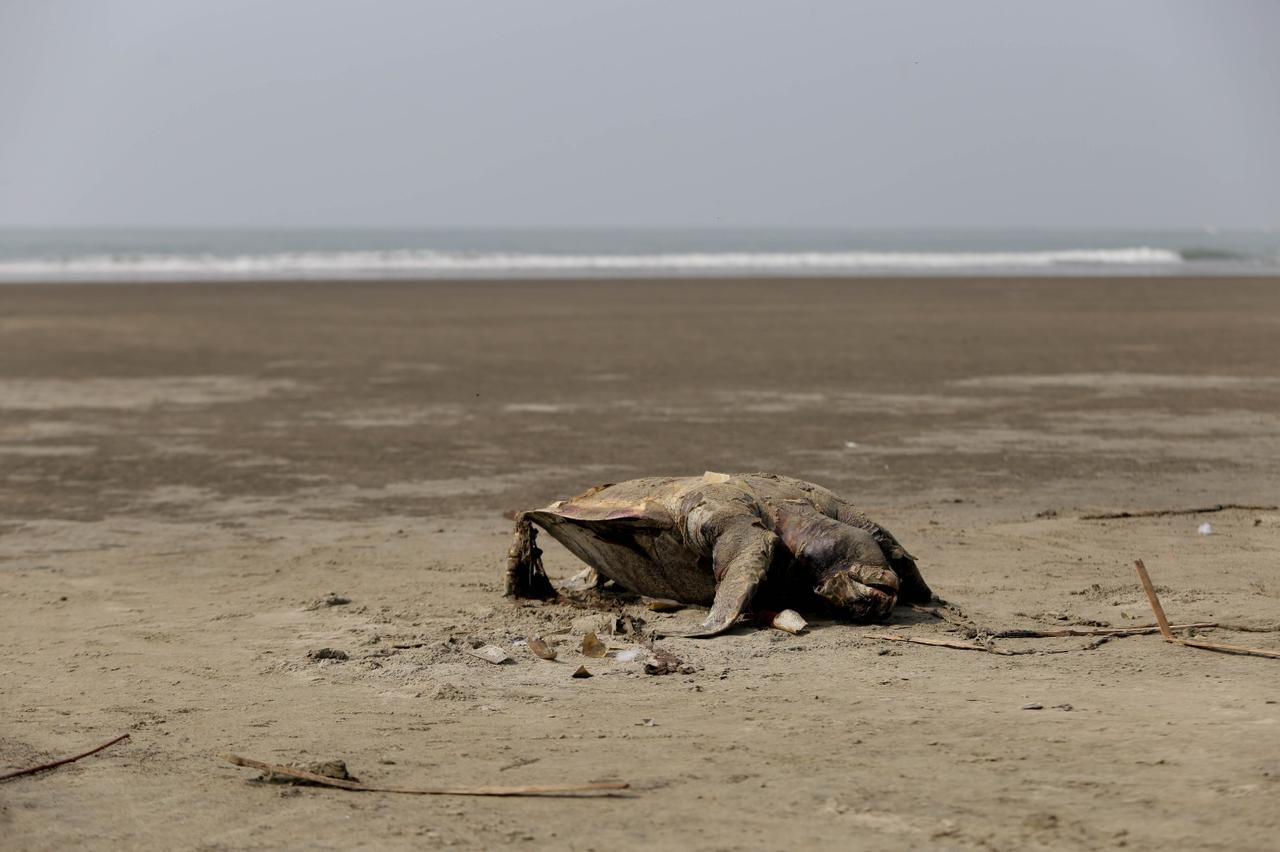
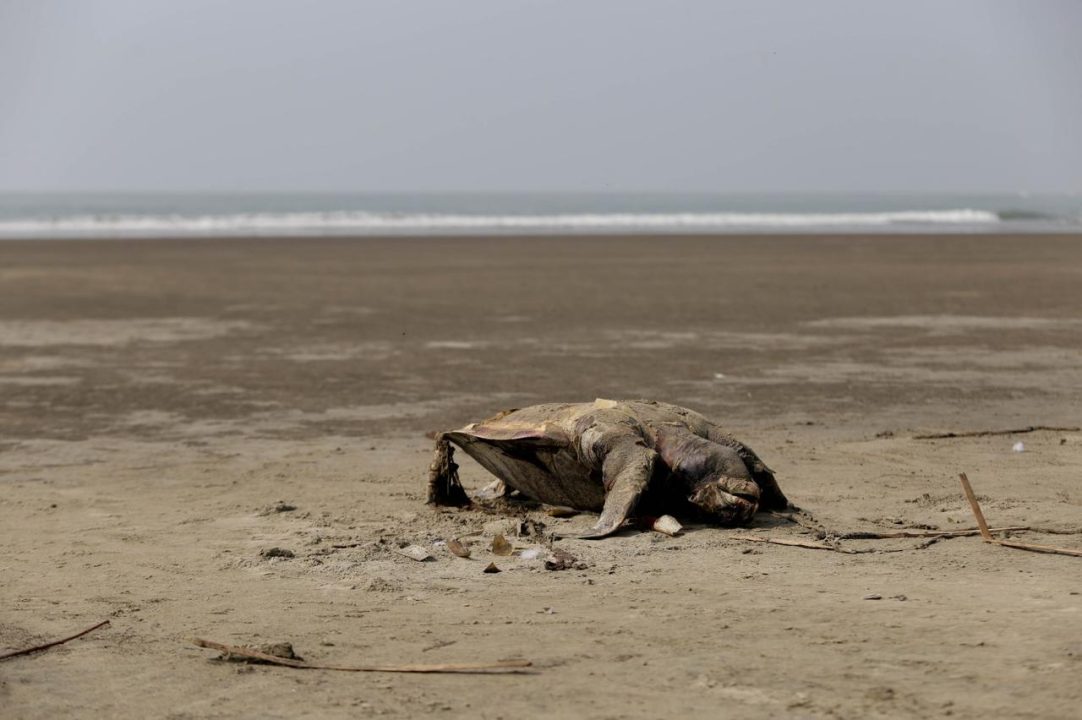
The waves still roll onto the shores of Cox’s Bazar as they always have. They arrive, they retreat. However, the lifeless bodies of sea turtles, scattered across the sandy dunes, appear to halt time. These ancient marine creatures, which have survived storms and tides for thousands of years, are now losing their lives along the Cox’s Bazar coast.
The growing number of dead turtles washing ashore raises troubling questions: Are these isolated incidents or silent warnings of a deeper environmental crisis? Is the sea itself becoming unwell?
Recently, several dead sea turtles were found lying on the dunes near Pechar Dwip and Sonar Para beaches along the Marine Drive road in Cox’s Bazar.
Local fisherman Halim said such scenes are not new. “For years, we have been seeing dead turtles appearing along different parts of the coast,” he said.
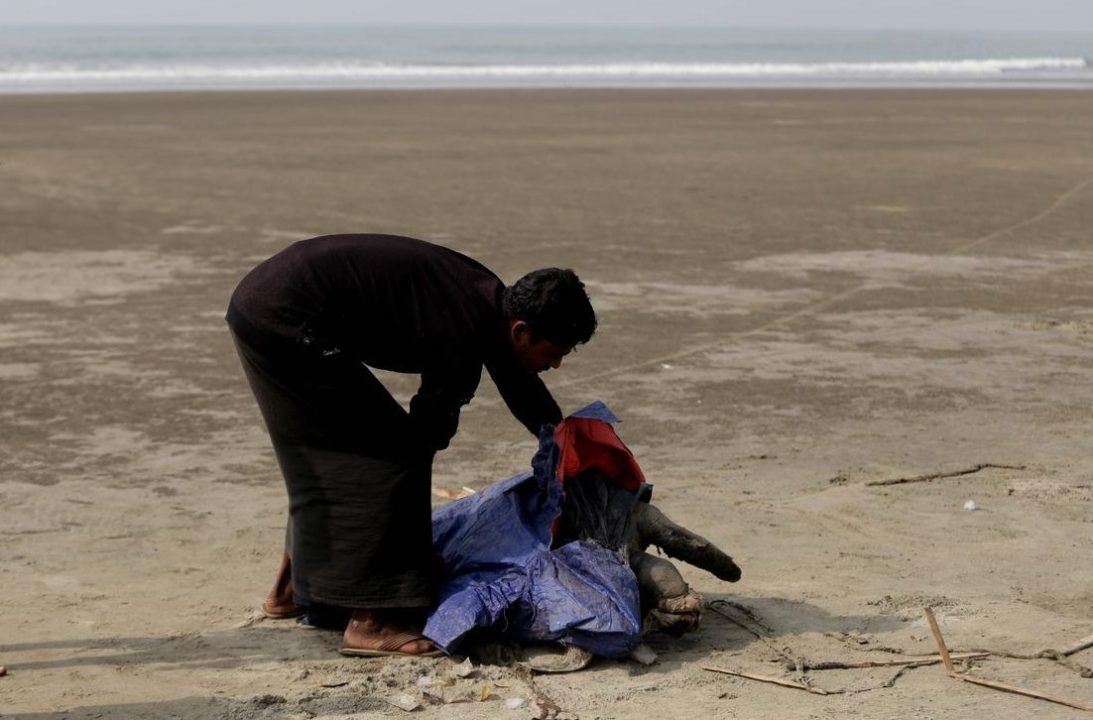
Arif Ullah, who collects shells along the beach, said people often do not notice the carcasses immediately.
“After two or three days, the bodies begin to decompose, and the smell becomes unbearable. Sometimes several turtles wash ashore one after another. Many of them weigh around 10 to 15 kilograms,” he said.
He also said that people who earn their livelihoods on the beach often try to bury the dead turtles themselves, although it becomes difficult when the carcasses are large, which can lead to health hazards and environmental issues if not properly managed.
Researchers said that the issue reflects a wider ecological concern.
Mohammad Arifur Rahman, research associate at WorldFish Bangladesh, said sea turtles are a crucial keystone species in the marine ecosystem. However, their presence along the Cox’s Bazar coast has declined by nearly 80 per cent over the past four decades.
He said the main reasons include turtles becoming entangled in fishing nets or hooks, coastal settlement expansion, unplanned afforestation and construction activities, beach pollution, and increasing tourism, which reduces the availability of suitable nesting areas.
Moreover, attacks by predators, the inability of mother turtles and hatchlings to safely return to the sea after nesting, and the lack of effective conservation measures are also major threats, he added, saying that climate change is also contributing to the decline.
He warned that the disappearance of sea turtles could disrupt the balance of the marine ecosystem, leading to a significant decline in fish production in the future.
He suggested coordinated efforts from local communities, government agencies, and non-government organisations to protect the sea turtles.
Md Abdul Kaiyum, a researcher at the Radiant Research and Education Center, said around 60 to 70 dead sea turtles have washed ashore along the Cox’s Bazar coast in the past two months alone.
“The incidents have been particularly frequent near Sonadia Island, the Cox’s Bazar coast, Teknaf, and Saint Martin’s Island,” he added, explaining that during the nesting season, turtles often get trapped in fishing nets or are struck by fishing trawlers while approaching the shore.
Even when fishermen cut the nets to release them, many turtles die later due to severe bleeding or internal injuries, he added.
The recovery of more than 200 dead turtles from coastal areas last year underscored the severity of the situation.
Kaiyum emphasized the urgent need for strict enforcement of government regulations, regular mobile court drives, and increased public awareness among coastal communities.
“The authority should take measures to aware fishermen that the survival of sea turtles could help maintain marine biodiversity. Turtles also control jellyfish populations, which ultimately benefits fish production and supports fishermen’s livelihoods in the long term,” he added.
The growing impact of climate change, such as rising sea temperatures, abnormal tidal patterns, and an increasing frequency of cyclones, has also disrupted the natural breeding cycle of sea turtles, he added, noting that higher temperatures in coastal dunes can affect egg development and reduce hatchling survival rates.
“Beyond awareness among fishermen, climate-resilient coastal management, protection of nesting sites, and long-term environmental planning are essential. Without coordinated efforts, the survival of sea turtles could face an even greater threat in the future,” said Kaiyum.
Imtiaz Ahmed, manager of the Sea Safe Lifeguard team responsible for tourist safety on the Cox’s Bazar beach, said many dead sea turtles have washed ashore in recent years, particularly around three major beach points — Laboni, Kolatoli, and Sugandha.
“This is a serious warning for the marine environment,” he said, adding that plastic waste and other forms of pollution dumped into the sea are worsening the situation.
He urged tourists and local residents to keep the sea clean by avoiding throwing plastic bottles, polythene, and food packaging into it.
HM Nazrul Islam, organisational secretary of the Cox’s Bazar district unit of the Bangladesh Poribesh Andolon (BAPA), said the death rate of sea turtles along the coast has increased sharply over the past four to five years.
“The main causes include suffocation after getting trapped in fishing trawler nets, injuries from propellers, light pollution, and crowds caused by tourism, as well as attacks by stray dogs on the beach,” he added.
Moreover, cyclones, tidal surges, and abnormal rainfall also destroy turtle eggs and hatchlings.
Nazrul Islam cautioned that immediate action is necessary to safeguard the species.
“Public awareness must be strengthened and effective conservation measures implemented immediately; otherwise, these silent deaths will continue to rise, and the Cox’s Bazar coast may one day stand not only as a tourist destination but also as a tragic reminder of a disappearing species,” he added.
By Mohammad Morshed
Photo: Hussain Shetu