

UNICEF has issued a warning about an imminent crisis in the education of Rohingya children in Bangladesh, stating that a severe funding shortage is causing the closure of learning facilities in the refugee camps.
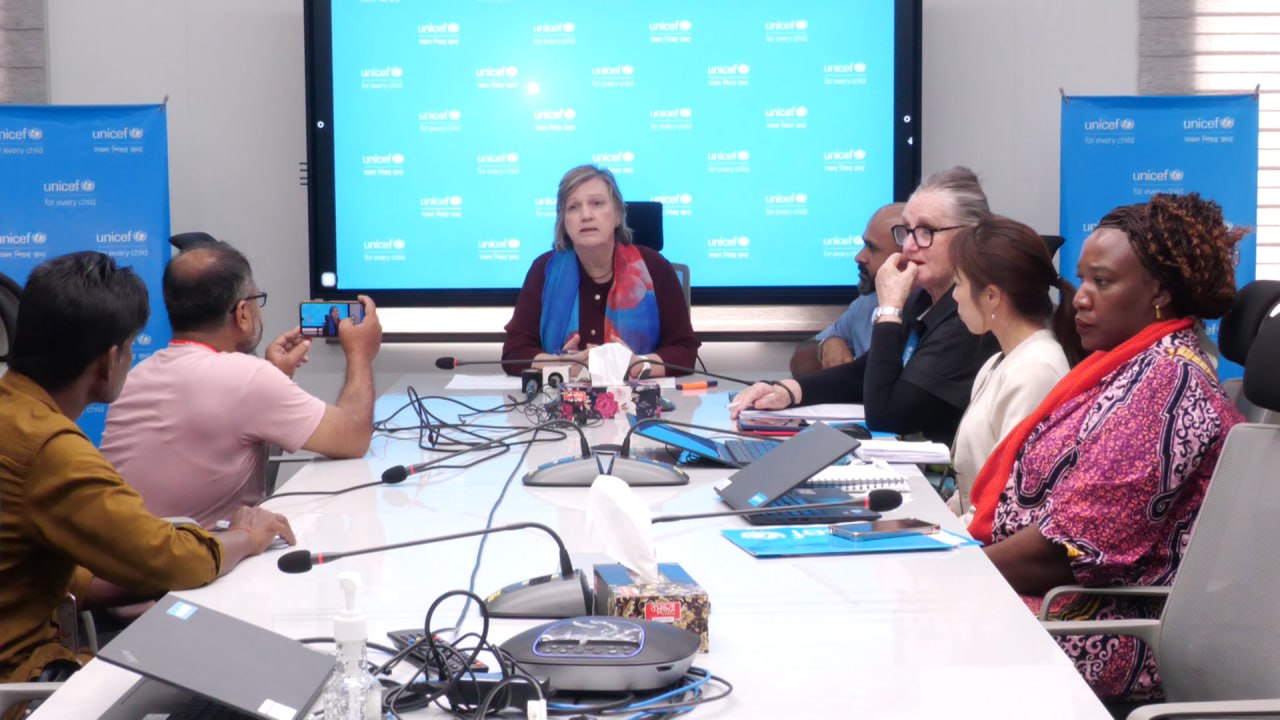
At a press conference held Sunday at UNICEF’s regional office in Cox’s Bazar, the agency revealed the deteriorating state of education for children living in the 34 Rohingya camps.
Rana Flowers, UNICEF Representative to Bangladesh, said that as of July 31, 2025, there are nearly 595,354 children under the age of 18 in the camps, with an average of 30,000 births recorded annually over the past eight years. Despite the emergence of a new generation, the prospects for their education are becoming increasingly bleak.
At its peak, the camps housed 4,108 educational facilities, comprising 3,092 learning centers. However, due to dwindling funds and operational challenges, nearly 4,000 institutions have shut down, including 2,724 learning centers.
“As a result, some 150,000 children from kindergarten to grade four are now excluded from education,” Flowers said, warning that many are slipping into child labor, early marriage, and other forms of exploitation. Currently, approximately 250,000 children remain enrolled, with 75 percent attending UNICEF-supported centers.
The funding crunch has also led to the dismissal of 1,179 teaching volunteers from host communities. About 1,370 teachers continue to work, but their positions remain uncertain. UNICEF further reported that 3,873 Rohingya teaching volunteers remain active, although many are not receiving regular stipends.
Flowers noted that some dismissed teachers have staged protests, blocking UNICEF vehicles and issuing threats. “They have told our staff that unless their jobs are reinstated, there will be bloodshed. This not only jeopardizes education but risks disrupting other humanitarian operations as well,” she warned.
She emphasized that the global humanitarian landscape has depleted donor resources, as crises in Palestine, Ukraine, Somalia, and other regions drive competing needs. “I have worked with UNICEF for a long time, but I have never seen such a severe funding crisis,” she said.
Despite this, UNICEF is working to secure additional resources to sustain its educational programs. Flowers cautioned that if education collapses in the camps, “an entire generation will grow up without learning — a scenario that will impact not just the camps, but the entire region.”
Angela Kern, Head of UNICEF’s Cox’s Bazar Field Office, was also present at the briefing, which emphasized the need for “revitalized partnerships for a new phase of support.”
By Abdu Rashid Manik
Photo: Courtesy