
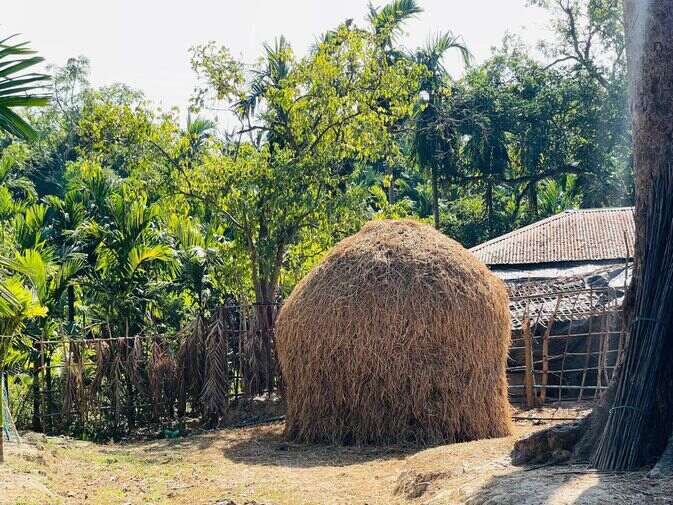
One of the iconic symbols of rural Bengal’s agrarian lifestyle is the haystack, locally known as Kuijja. These haystacks, used as fodder for domesticated animals, were once a common sight in the yards of almost every farming household.
They played an essential role in cattle rearing and were a vital resource for livestock feed.
However, with the passage of time and the wave of modernization, the prevalence of haystacks in rural communities has significantly diminished. While commercial cattle farming has risen nationwide, many individual farmers have stopped keeping livestock at home.
Despite this, the tradition endures in some areas. Recently, we spotted haystacks on raised platforms by houses or along roadside fields in a Teknaf village, serving as quiet reminders of a rich agrarian past.
Along with green grass and bran, dry hay remains a crucial component of cattle feed. For those who continue to balance farming with raising livestock, haystacks serve as a cost-effective and reliable source of nutrition for their animals.
Preserving this tradition is more than just retaining a piece of the past; it is about safeguarding a vital aspect of rural life for future generations.
By Mohammad Morshed
Photo: Mohammad Morshed