
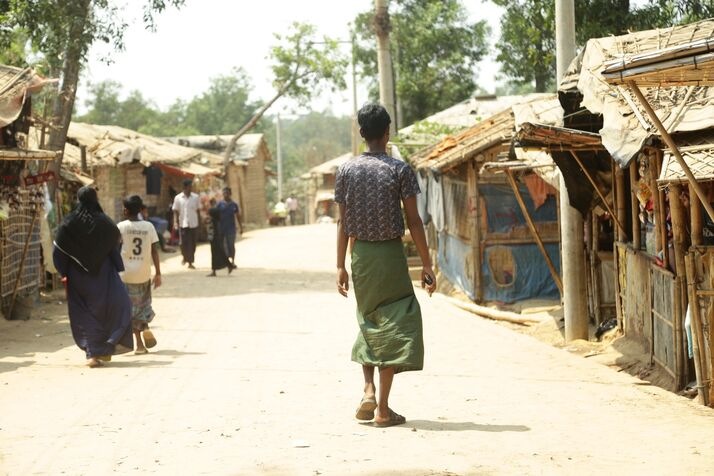
On August 25, 2017, Azim Ullah fled his home in Bolibazar, Rakhine State, Myanmar, with six family members, seeking refuge in Bangladesh. For nearly eight years now, he has been living with his family in a makeshift shelter made of tarpaulin and bamboo on a hillside in the Hakimpara refugee camp in Ukhiya, Cox’s Bazar. Two more children were born during this time—but the hope of returning home remains as distant as ever.
Like Azim Ullah, many among the nearly one million Rohingyas residing in the world’s largest refugee settlement are grappling with growing despair as repatriation remains uncertain.
Today, June 20, marks World Refugee Day, being observed globally under the theme “For Refugees, With Refugees – In Solidarity.” But for the Rohingya, it is another reminder of the prolonged wait to return home.
Community leaders and rights activists say that although the Myanmar junta has recently agreed, in principle, to repatriate 180,000 Rohingyas, the process has been stalled. For over a year, violent clashes between government forces and the ethnic rebel group Arakan Army have intensified in Rakhine, making the region unstable and unsafe for return.
Mohammad Zubair, chairman of the Arakan Rohingya Society for Peace and Human Rights, expressed grave concern: “The Arakan Army is committing ethnic cleansing in Rakhine. More than 300,000 Rohingyas still in the state are living in extreme insecurity.”
Meanwhile, Refugee Relief and Repatriation Commissioner (RRRC) Mohammad Mizanur Rahman stated that repatriation efforts have not ceased. “The government is continuing dialogue with Myanmar at multiple levels,” he said, reaffirming Bangladesh’s commitment to a peaceful and dignified return of the Rohingya.
By Abdu Rabb Manik
File Photo