
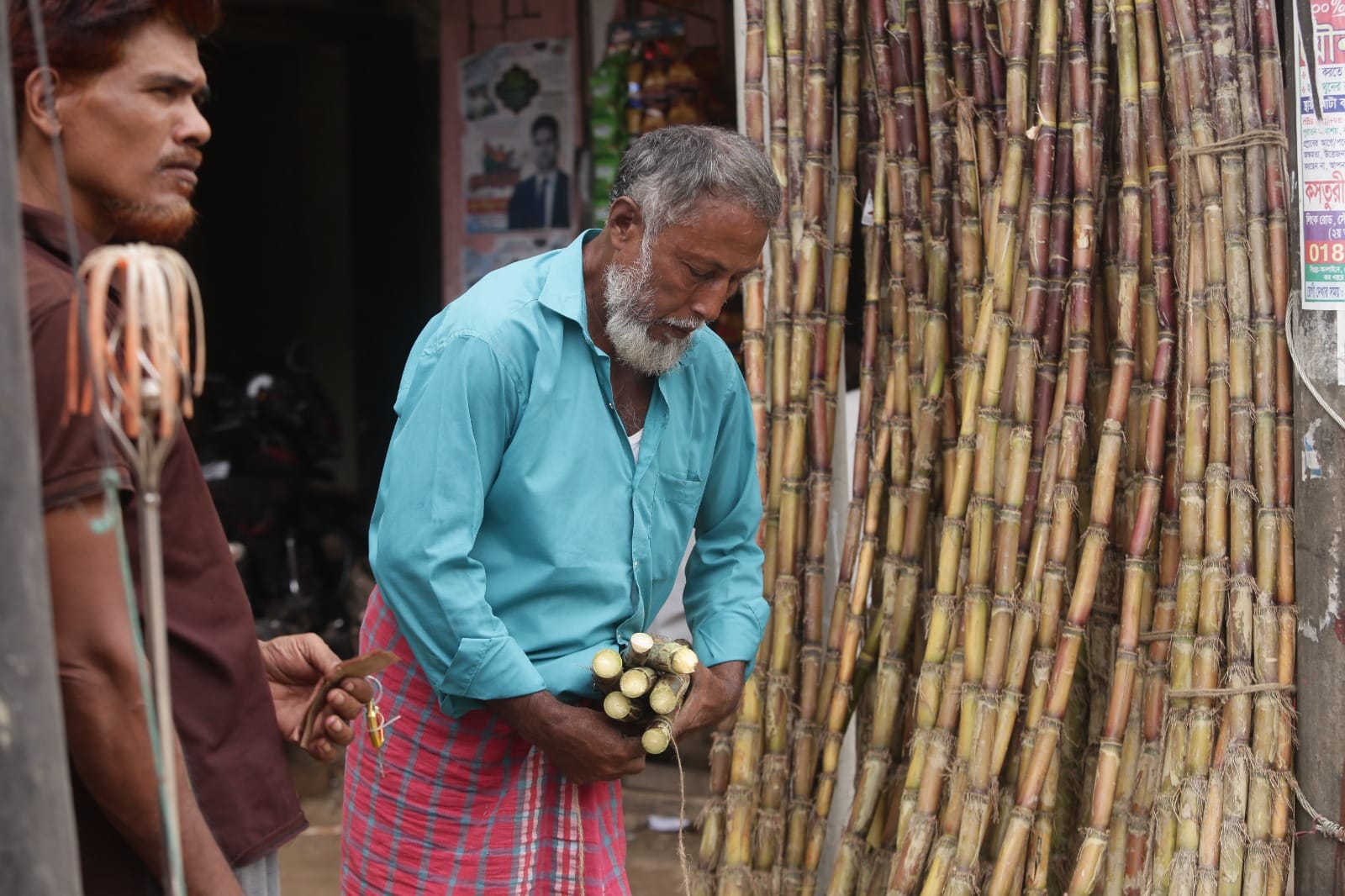
It is sugarcane season in Cox’s Bazar. Rows of sugarcane vendors are now visible from the town’s alleyways to the bustling areas around the beach.
For sun-weary pedestrians or tourists strolling along the shoreline, nothing seems more inviting than a chilled glass of sugarcane juice.
Particularly popular are the canes grown in Chakaria and Ramu upazilas, which have made their way into local markets with enormous demand.
People sell sugarcane and fresh juice in abundance, whether at town bazaars, street corners, or by the beach. The price of a single cane ranges from Tk 40 to Tk 60.
According to traders, the bulk of sugarcane cultivation in Cox’s Bazar takes place in Chakaria and Ramu.
Farmers from Ramu harvest their crops and sell them wholesale before they reach retailers in town. This benefits the growers and provides good income opportunities for local traders.
A visit to Morichya bazaar shows long queues in front of sugarcane and juice stalls. Some people carry whole canes home on their shoulders, while others pause to quench their thirst with a refreshing glass of juice.
“Ramu’s sugarcane sells out quickly,” said one vendor. “People love its taste, and the juice is excellent. These days, sales are strong every day.”
Locals claim that Ramu’s cane is distinct—sweeter and juicier than others. This has made it a favorite not only among residents but also among tourists, many of whom buy Ramu’s sugarcane to take home for their families on their way back from Cox’s Bazar.
Beyond being a seasonal treat, sugarcane juice has become something of a natural energy drink, offering immediate relief to those tired under the scorching sun.
For farmers and traders alike, sugarcane and its juice are more than just a source of livelihood—they have also become a symbol of seasonal refreshment in Cox’s Bazar.
And in doing so, this simple crop is playing a small but meaningful role in the local economy of the country’s most famous tourist town.
By Abdu Rashid Manik
Photo: Hussain Shetu