
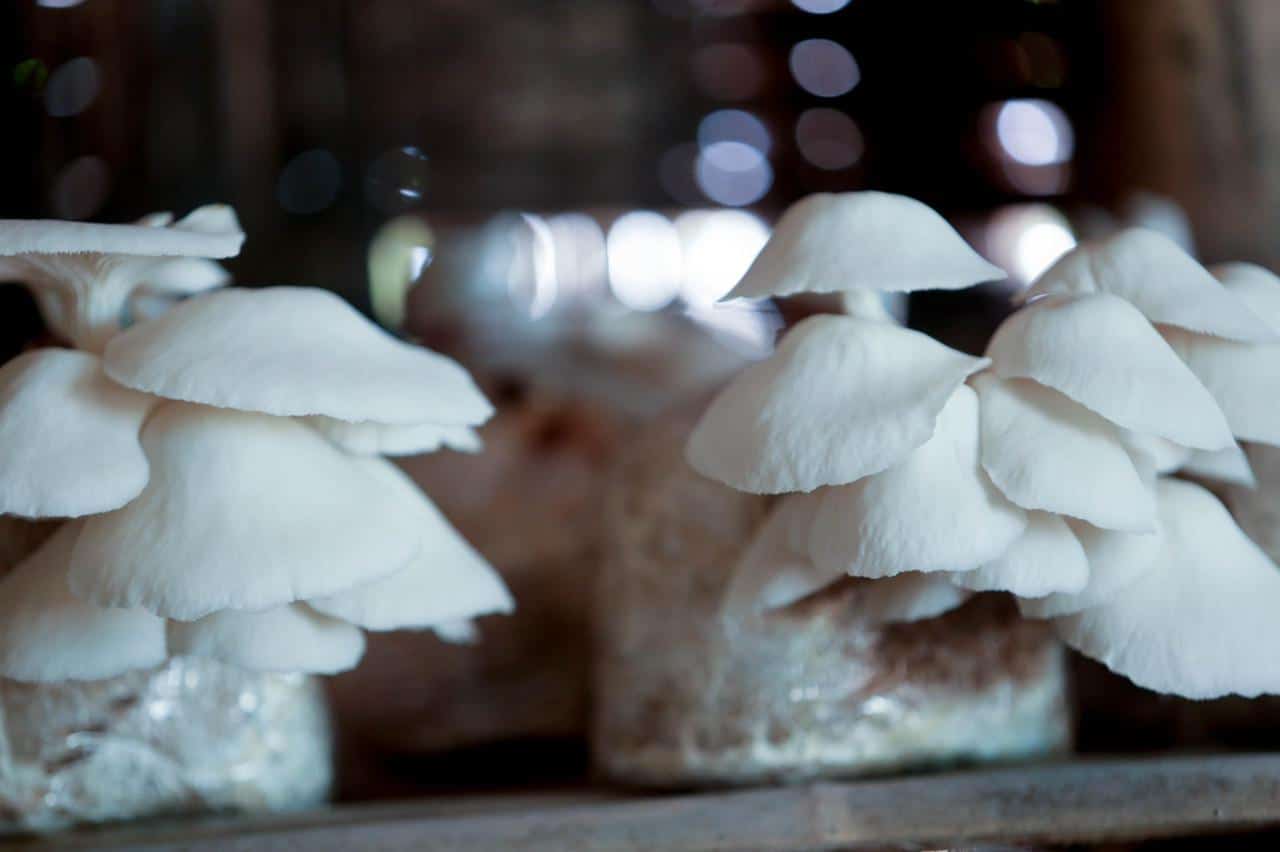
A new horizon of economic opportunity is unfolding in Cox’s Bazar through mushroom cultivation.
The region’s coastal climate and soil conditions are proving ideal for mushroom farming, prompting local farmers to shift toward this profitable crop.
With low investment, minimal space requirements, and short production cycles, mushroom cultivation is rapidly gaining popularity.
Local farmer Mahmudul Haque Chowdhury shared that mushrooms are now regarded as the “white gold” of Cox’s Bazar. “Currently, I sell mushrooms at Tk 400 per kilogram,” he said. “The demand is so high that I can barely meet the local orders—people from nearby villages come every day to buy mushrooms directly.”
When asked about the reason behind the growing demand, he explained, “Mushrooms have become a favorite food for many. Since Cox’s Bazar has a large number of hotels and restaurants serving seafood, people now prefer dishes that combine mushrooms with fish or prawns. As a result, the demand is continuously rising.”
Chowdhury stated that government support could facilitate the expansion of large-scale mushroom farming, not only to meet domestic demand but also to create export opportunities.
According to local agriculture officials, mushrooms are rich in protein, minerals, and vitamins, making them increasingly popular in both local and international markets.
The potential for exporting dried mushrooms, mushroom powder, and other processed food products is growing fast.
In several upazilas—Sadar, Ramu, Chakaria, and Maheshkhali—young entrepreneurs have already started modern indoor mushroom farming, inspiring others with their success stories.
Agriculture experts believe that with proper training, government support, and access to soft loans, Cox’s Bazar could become a leading hub for mushroom production in Bangladesh.
Such development could create significant employment and income opportunities for the local population.
By Mohammad Morshed
Photo: Hussain Shetu