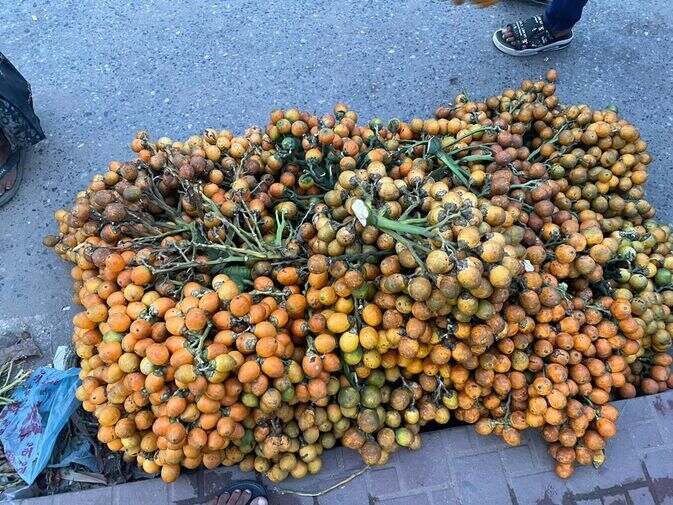
Every morning, the quiet neighborhood of Goonghachtola in Cox’s Bazar bursts into life with the hustle and bustle of one of the town’s busiest markets — the supari (betel nut) bazar. From early morning until noon, hundreds of traders and buyers crowd the area, coming from the city and nearby villages to purchase fresh betel nuts and paan leaves.
Rows of stalls line the marketplace, displaying piles of betel nuts of all shapes and sizes — small, large, round, and flat — as customers carefully choose their preferred variety. According to traders, most of the supari is brought from the Sonarpara area before being sold here, both wholesale and retail.
One local trader said, “We buy betel nuts from Sonarpara and sell them in town. A pon (80 pieces) now sells for Tk 300 to Tk 450, depending on the market price.”
Alongside betel nuts, paan leaves, lime, and khoir (catechu), the market remains vibrant throughout the day. Until evening, the lanes echo with the sounds of bargaining, laughter, and trade — a rhythm that defines the local way of life.
Residents say the Goonghachtola supari market has been operating for decades, evolving from a simple trading spot into a cherished part of Cox’s Bazar’s cultural and commercial heritage.
By Abdu Rashid Manik
Photo: Abdu Rashid Manik