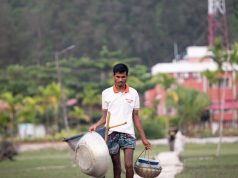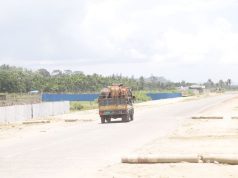

There was a time when thickets and small forest patches across rural Bangladesh served as a vital source of fuel for low-income families.
Collecting dry leaves, shrubs, and branches for cooking fires was part of daily life. But with rapid population growth, much of that woodland has disappeared.
Land has been converted into settlements and farmland, and with the loss of forests, easy access to natural fuel has also declined.
This change has had a significant impact on the coastal upazila of Maheshkhali in Cox’s Bazar. In many rural communities here, cooking fuel has become a serious concern for low-income households.
While middle- and upper-income families can afford gas or purchase firewood, poorer families — particularly women — are left to seek alternative solutions.
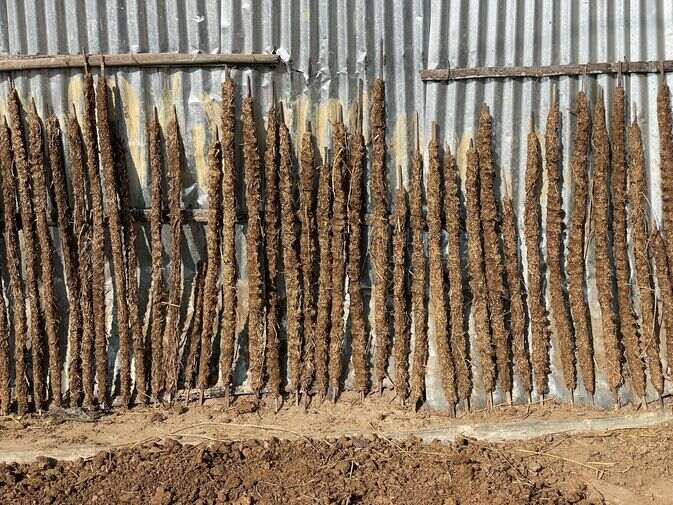
In response to the fuel shortage, residents in remote villages of Moheshkhali are producing traditional fuel sticks made from cow dung. Affordable and readily available, this form of fuel has become a practical lifeline for many households.
At first light, the day begins for many homemakers in the cattle shed. They collect fresh cow dung in baskets and mix it with a small amount of rice husk. Using slender bamboo sticks or jute stalks about two to three feet long, they shape elongated fuel sticks by hand.
The freshly made sticks are then set upright in courtyards or along roadside spaces to dry in the sun. After two to three days of steady sunlight, they harden and are ready for use. Families store them for everyday cooking and as preparation for the monsoon season, when dry fuel becomes scarce.
Residents of Kalarmarchara Union in Moheshkhali, including homemakers Momina Begum and Sabitri Rani, said they prepare these dung sticks regularly during the dry season.
In addition to daily use, they build up reserves for the rainy months, when gathering or purchasing dry fuel becomes difficult.
The disappearance of small forested areas has affected the environment and reshaped rural livelihoods.
With natural resources no longer easily accessible, low-income families must invest more labor to secure basic necessities such as cooking fuel.
Yet amid these challenges, women in Moheshkhali have demonstrated resilience and ingenuity in sustaining their households.
Though cow dung fuel is not a modern energy solution, for many families in Moheshkhali, it represents a means of survival. In the shadow of environmental loss, their efforts stand as a quiet testament to self-reliance and perseverance.
By Abdu Rashid Manik
Photo: Abdu Rashid Manik