
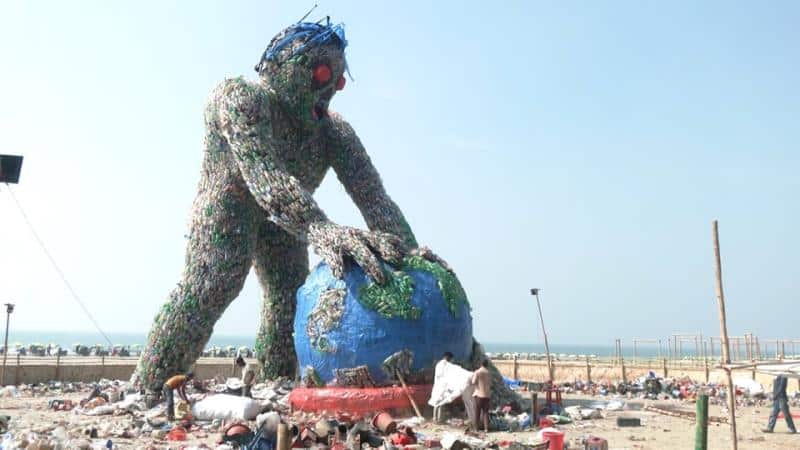
The widely discussed 10-ton “Plastic Monster” sculpture installed at Sugandha point of Cox’s Bazar sea beach has been removed, with all plastic materials sent for recycling.
The sculpture, built as part of an anti-plastic pollution awareness campaign, was completely dismantled on April 15. The program’s coordinator, Muhammad Mobarak, said the removal began on April 11 and was completed within five days through voluntary efforts.
Around 10 tons of discarded plastic collected from the coastal area had been used to construct the 45-foot-high installation. Artists from the Faculty of Fine Arts at the University of Dhaka built the sculpture over 22 days, using plastic along with bamboo, wood, nails and adhesive materials.
The “waste monster” symbolised the growing threat of plastic pollution in the ocean. Throughout the tourist season, thousands of visitors gathered to see the installation, many of whom engaged with its environmental message.
The Bidyanondo Foundation and the Cox’s Bazar district administration jointly organised the initiative as part of a broader campaign against plastic pollution. Typically, we hold such exhibitions annually between November and March, and the programme has been running continuously since 2022.
Organisers said that while previous editions used 4 to 8 tons of plastic, this year’s sculpture incorporated nearly 10 tons. After the exhibition, all materials were collected for reuse and recycling.
According to Bidyanondo Foundation, around 500,000 metric tons of marine plastic waste have been collected and recycled from the Cox’s Bazar coast since 2022.
Environmentalists caution that plastic pollution poses a serious threat to marine biodiversity in the Cox’s Bazar–Saint Martin’s coastal region.
Organisers anticipate the programme’s resumption in October, along with the introduction of new awareness initiatives.
Cox’s Bazar Life Report
Photo: Courtesy