
Dengue was once considered a seasonal disease in Bangladesh, mainly surfacing during the monsoon months of June to October. But in recent years, the picture has changed drastically. Dengue has become a year-round health concern, and experts point to climate change and environmental shifts as key drivers behind this alarming trend.
However, specialists also emphasize that the disease can be prevented through awareness and simple precautionary measures.
Rising and Falling Numbers
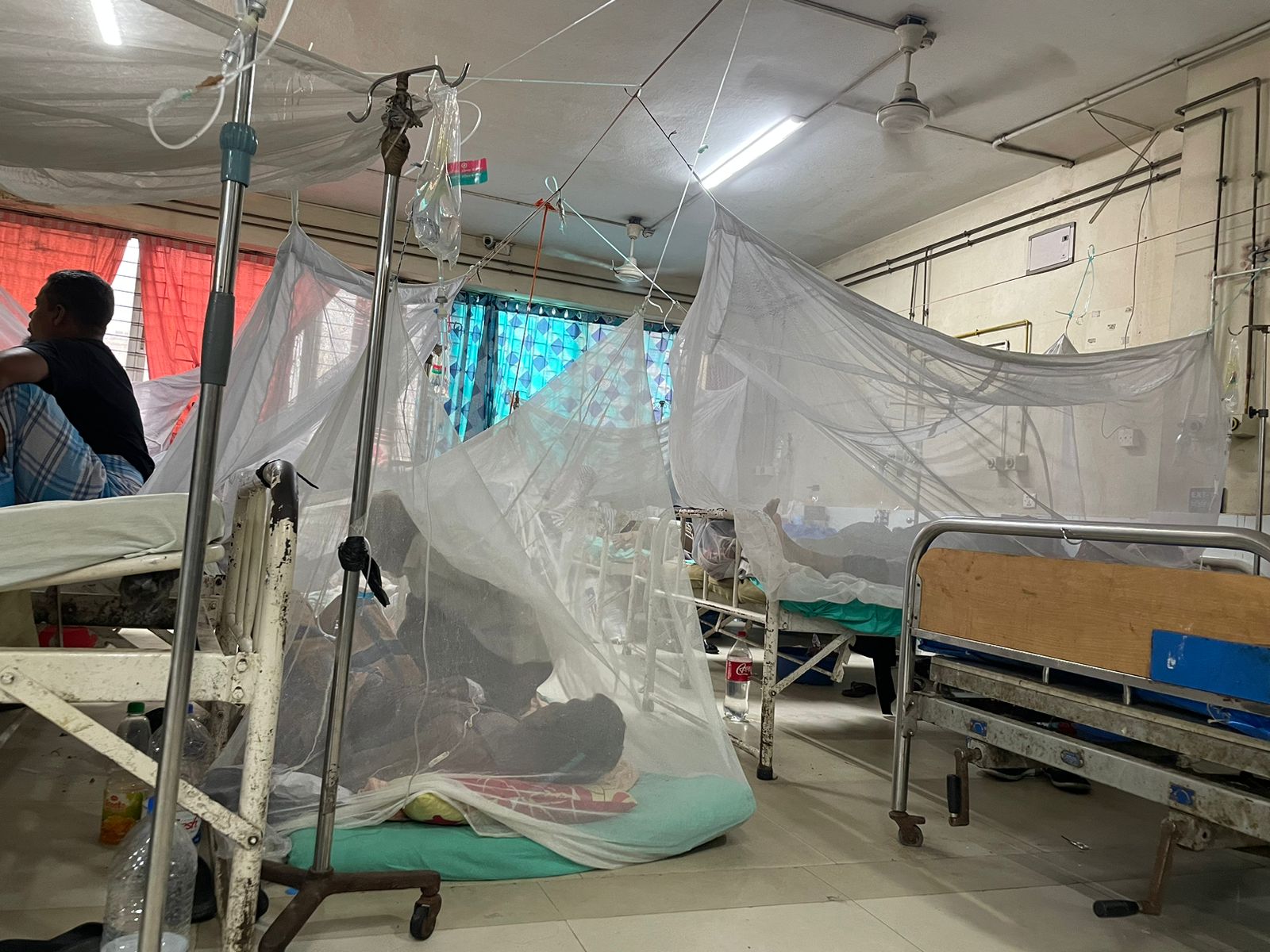
According to Cox’s Bazar Civil Surgeon’s Office data, 1,938 dengue cases were reported between January and May of 2024. The numbers then surged: 337 in June, 965 in July, 4,347 in August, 5,123 in September, 4,386 in October, 3,431 in November, and 948 in December. That year, dengue claimed seven lives.
The 2025 scenario has so far been less severe. From January to August 25, 5,350 patients were diagnosed: 219 in January, 101 in February, 86 in March, 399 in April, 1,162 in May, 1,336 in June, 1,852 in July, and 195 in August. Notably, no deaths have been reported this year.
The statistics clarify that dengue is no longer confined to the monsoon season.
Why Dengue is Now Year-Round
“Previously, dengue cases would spike during the monsoon because stagnant water created ideal breeding grounds for Aedes mosquitoes,” said Dr. Sabuktogir Mahmud Sohel, Resident Medical Officer (RMO) at Cox’s Bazar Sadar Hospital. “But now, patients are being admitted throughout the year. Environmental and man-made changes have allowed Aedes mosquitoes to survive and reproduce year-round.”
He further noted: “In the past, Aedes mosquitoes couldn’t survive all year. But now, perhaps due to climate change, conditions allow them to thrive. Earlier, they would bite mostly in the morning and evening, but now they bite at any time of day.”
Dr. Mohammad Shahjahan Nazir, Assistant Professor at Cox’s Bazar Medical College and specialist in infectious and tropical diseases, added: “The seasonal pattern of dengue has disappeared. We now see cases even in winter. Dengue has become endemic in Bangladesh and is present throughout the year. The mosquito population has adapted to the changing environment.”
Cox’s Bazar Civil Surgeon, Dr. Mohammadul Haque, said: “Research by IEDCR is ongoing to determine the exact links between dengue and climate change. But what’s clear is that 10–15 years ago, dengue was not a national issue. Now it’s present year-round, which is undoubtedly linked to climate change. In Cox’s Bazar, most of the infected patients are from the Rohingya refugee camps.”
Prevention is Key
Doctors emphasize that prevention must come through both personal and institutional efforts.
“We need to take awareness seriously,” said RMO Dr. Sohel. “Clean courtyards, remove stagnant water, destroy mosquito breeding grounds, and always sleep under mosquito nets—especially children, even during the day. Media campaigns and government initiatives by city corporations, municipalities, and local councils are essential to reducing mosquito populations.”
Dr. Nazir highlighted the gravity of the threat: “Dengue and malaria are more dangerous than Covid-19 if left untreated. They can kill. There is no substitute for awareness—using mosquito nets, repellents, and destroying breeding sites.”
Treatment and Warning Signs
Dengue symptoms initially resemble common viral fever, but the disease can turn fatal without early testing.
“Every fever case should be checked with a CBC (Complete Blood Count) test,” explained Dr. Sohel. “Monitoring blood pressure, fluid levels, and platelet count is crucial. Patients must avoid antibiotics and painkillers such as NSAIDs, as they can worsen the drop in platelets and lead to fatal complications.”
Dr. Nazir advised: “Paracetamol and plenty of fluids, including oral saline, are essential. Warning signs include reduced urination, abdominal pain, vomiting, bloating, or fluid accumulation. In such cases, patients must consult a doctor immediately and stay under mosquito nets to avoid spreading the virus.”
Civil Surgeon Dr. Haque added, “We conduct awareness campaigns year-round, especially in Rohingya camps where overcrowding creates ideal breeding grounds for Aedes mosquitoes. Coordination with humanitarian agencies is crucial to controlling the outbreak.”
By Abdu Rashid Manik
Photo: Abdu Rashid Manik