
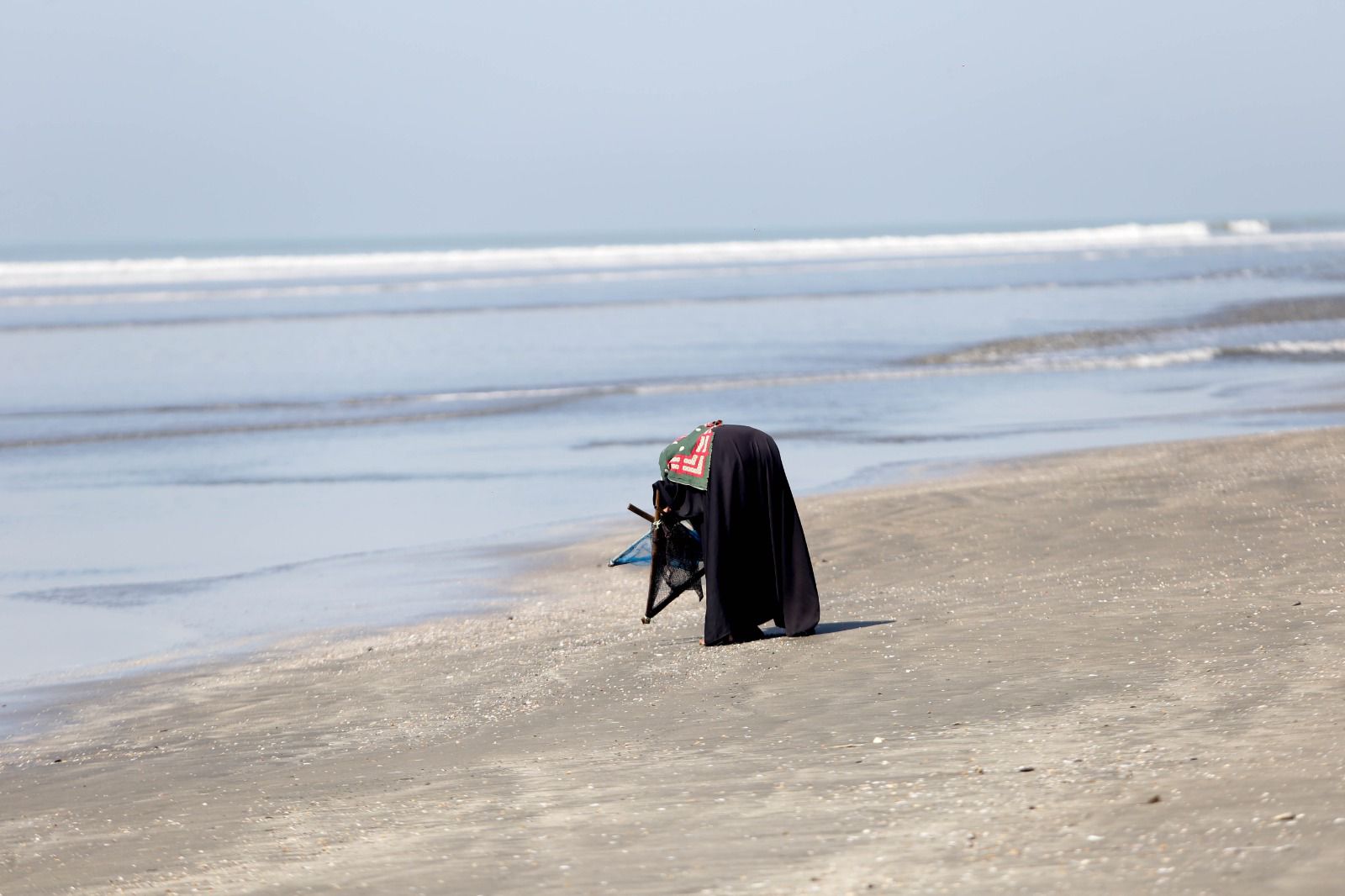
Dawn breaks along the expansive coastline of Cox’s Bazar, revealing a familiar scene of survival and livelihood.
In the photo, a local resident is seen using a traditional handheld fishing tool—known regionally as khoja-khuji jal, hand-pushed net, or khoncha—to collect small fish, shrimp fry, seashells, and clams left behind by receding waves.
The tool is easy to use and is made of two wooden frames with a piece of cloth or net attached to them.
Bending forward, the user drags it through wet sand as the tide withdraws.
As the sand filters through, tiny marine species become trapped inside, later sorted and sold for income.
According to locals, long before modern fishing gear became common, this device was a vital means of livelihood for coastal households.
Even today, many families take to the beach every morning with these nets—hoping to secure the minimum earnings needed to sustain the day.
By Mohammad Morshed
Photo: Hussain Shetu