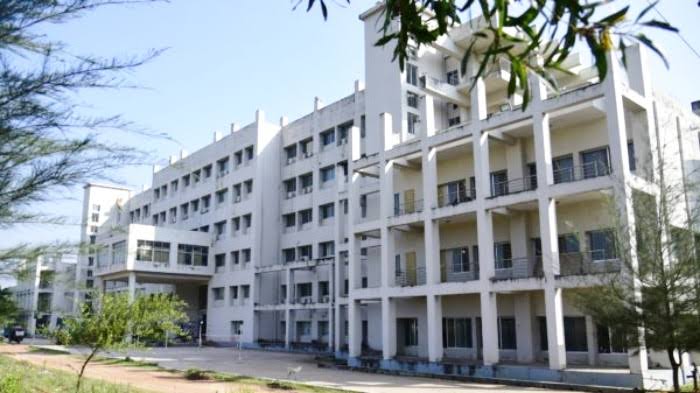
In a long-awaited development, the national procurement committee (CCGP) finally gave the green light to construct a 500-bed hospital at Cox’s Bazar Medical College — 17 years after the college was established. A similar approval was also granted for Jessore Medical College.
Confirming the news, Dr. Sohel Baks, Principal of Cox’s Bazar Medical College, said, “We’ve been informed that today’s CCGP meeting has granted final approval for the hospital. While we’re yet to receive the official documents, we expect them by tomorrow.”
He expressed his excitement and added, “We hope construction will begin very soon. Once we receive the official papers, we’ll be able to confirm the project cost and other details.” The new hospital will be a 10-storey facility.
Established in 2008 on a temporary campus beside Cox’s Bazar Sadar Hospital, the medical college began its academic operations in Jhilongja in 2017, following years of protests. However, due to the lack of an on-campus hospital, students have had to travel 10 kilometers to the district hospital for practical classes.
Students say that despite being labeled a “modern medical college,” it operates with only two ordinary buses for transportation. There is a severe shortage of teachers and residential facilities. Fourteen batches of students have already passed through the college without ever experiencing a fully functional medical college hospital.
A 500-bed hospital is a fundamental component of any complete medical college, typically offering services in at least 20 departments. But Cox’s Bazar Medical College has been deprived of this standard.
Many key academic positions, such as professors and associate professors, remain vacant. In some cases, assistant professors are attached to the college as stopgap measures, leaving junior faculty to shoulder the main academic burden.
Only six floors of the planned 10-storey academic building have been constructed. Two dormitories were supposed to be six stories high each but remain stalled at three floors, leading to cramped living conditions for students in makeshift group rooms. Students report that this significantly affects their studies.
Abu Morshed Chowdhury Khoka, president of the Cox’s Bazar Civil Society, emphasized the hospital’s significance: “Besides serving the local population, this facility will also cater to Rohingya refugees and millions of tourists visiting the region each year. The current 250-bed district hospital is grossly insufficient, often accommodating three to four times its capacity. A fully functional medical college hospital will be a blessing for the region.”
Health officials noted that the new facility will include critical care services such as CCU, ICU, and a dialysis center.
Dr. Ripon Chowdhury, an alumnus of the college currently serving at Cox’s Bazar Sadar Hospital, reflected on the journey: “We were among the first batches of students. We fought hard for a permanent campus and a complete hospital. It feels great to finally hear this news. Principal Sohel Baks has worked tirelessly to make this happen.”
By Abdur Rashid Manik
Photo: Collected