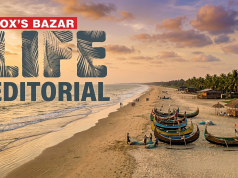


Cox’s Bazar is synonymous with its beach and tourism. But Bangladesh’s sea is more than a destination. Marine fisheries, aquaculture, ocean science, marine technology and sustainable coastal tourism represent economic opportunities that remain largely untapped. With its marine resources, coastal communities and tourism, Cox’s Bazar could become a starting point for realising that potential.
That requires a broader understanding of the Blue Economy. It is not simply fishing or tourism under a new label. It spans fisheries and aquaculture, marine research, technology, shipping, offshore energy, biodiversity conservation and other activities linked to the sea. Its premise is simple: ocean resources must generate value through knowledge, technology and investment without undermining the ecosystems on which that value depends.
Bangladesh has no shortage of maritime space. A 2018 World Bank assessment, based on 2015 data, estimated the country’s ocean economy at around $6.2 billion in gross value added, roughly 3 percent of the economy at the time. The comparison underscores a larger point: Bangladesh has yet to realise much of its maritime potential. The delimitation of maritime boundaries with Myanmar in 2012 and India in 2014 made that opportunity more tangible. But securing maritime space and building a maritime economy are different things. It requires research, technology, investment, skilled people and planning.
This is where Cox’s Bazar can assume strategic importance. Its fisheries, tourism, communities and environmental assets provide a base for marine knowledge, skills and enterprise, linked to the wider maritime economy of Chattogram, Maheshkhali-Matarbari and Teknaf.
It is in this context that the government’s proposed University of Blue Economy Sciences and Technology assumes significance. Its priorities should reflect real needs: marine science and technology, fisheries and aquaculture, coastal and environmental management, maritime innovation, and the skills required by emerging industries. Research should address local and national challenges, while partnerships with industry and communities can help turn knowledge into practical solutions. It may begin on a modest scale, but its vision cannot be modest.
Bangladesh faces no shortage of pressing problems. Yet its seas also offer a rare opportunity. The time has come to turn that opportunity into knowledge, skills and innovation—preparing a new generation to carry this ambition forward. The journey towards Bangladesh’s Blue Economy must begin now.
By Salam Abu
Editor