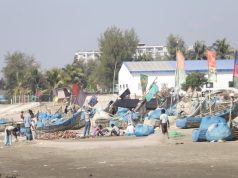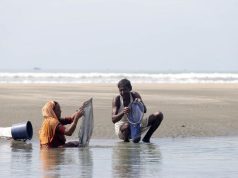

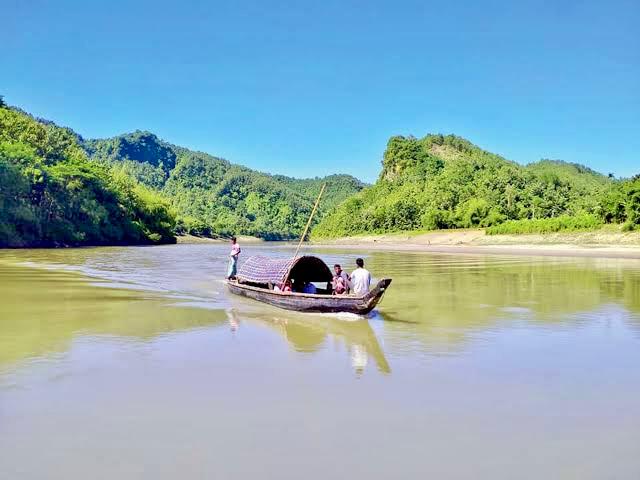
The Matamuhuri River, stretching 146 kilometers with an average width of 154 meters, flows through the eastern hill regions of Bandarban and Cox’s Bazar districts in Bangladesh. Deeply intertwined with the lives and livelihoods of the local people, the river’s waters fuel the farmers’ fields. At the same time, its diverse fish species have long supported the livelihoods of local fishing communities.
From its source in the hills to its final embrace with the Bay of Bengal, the Matamuhuri is joined by 113 streams and canals, including the Indu and Sindhu of Alikadam and the Baisyar Chhara of Chakaria, ensuring the river’s continuous vitality. Along its banks, ancient communities and civilizations have flourished, with the river serving as a vital artery for life and culture in the region.
Once, the Matamuhuri was alive with the movement of large boats and sampans, carrying people and goods across its waters. Travelers would spend entire days and nights aboard these boats, journeying from Chakaria to the distant hills of Lama and Alikadam for trade and labor.
During this era, river-centric markets and weekly bazaars sprang up along its banks, as traders and villagers traveled from one place to another, their livelihoods deeply connected to the gentle yet determined flow of the Matamuhuri.
By Mohammad Morshed:
Photo: Collected