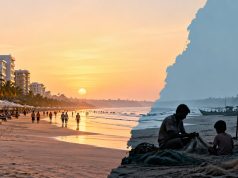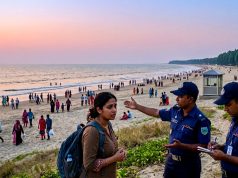

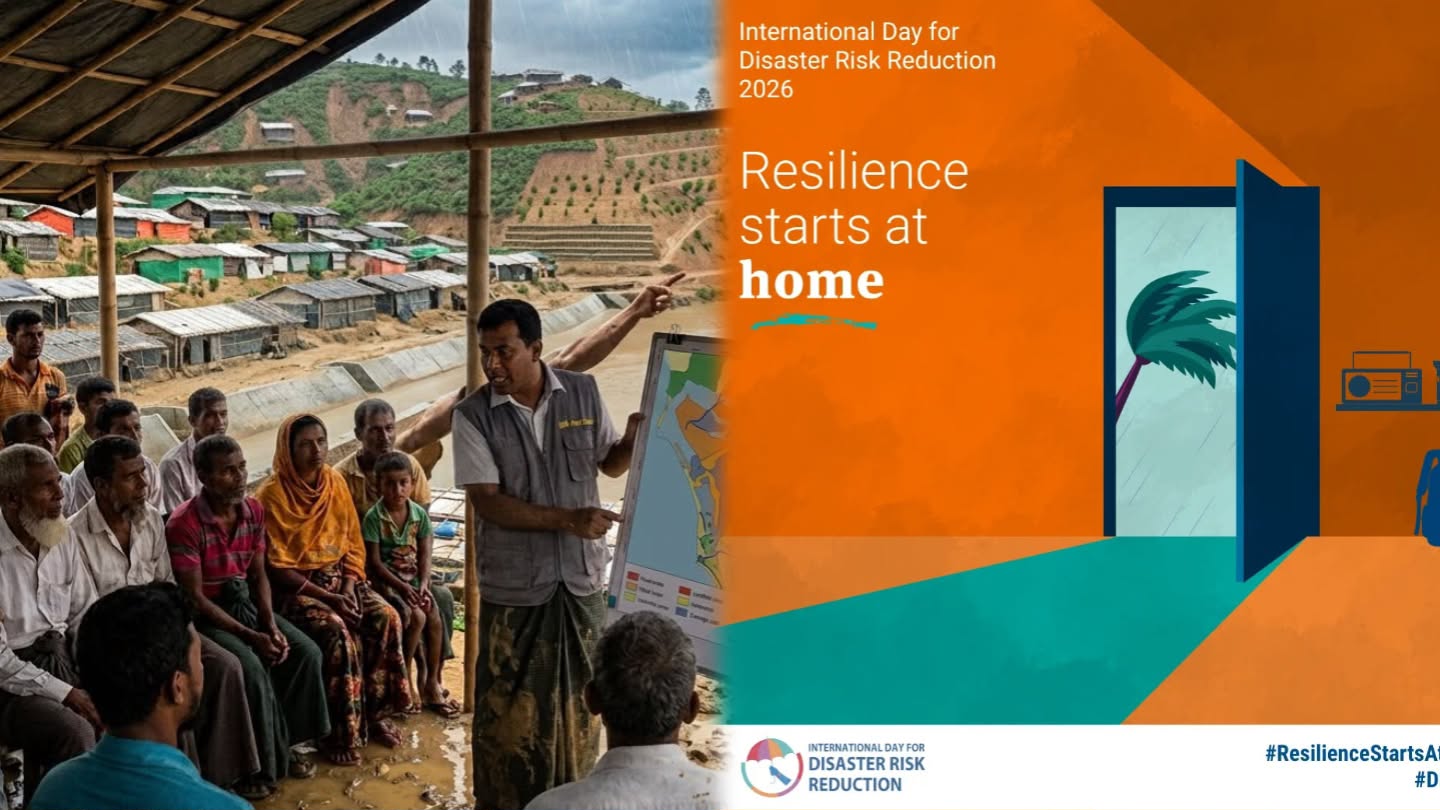
Today, 13 October, marks the International Day for Disaster Risk Reduction. In Cox’s Bazar, the occasion carries particular urgency. Coastal communities and Rohingya refugees face growing threats from natural hazards, while the district’s tourism-dependent economy is increasingly exposed. This year’s theme, “Resilience Starts at Home,” speaks directly to a place where thousands live in unsafe settlements with limited protection against disasters.
Cyclones and storm surges have long threatened Cox’s Bazar, but the dangers are no longer confined to the coast. Heavy rainfall, landslides, flash floods, waterlogging and lightning now pose serious risks. In July this year, floods and landslides killed 31 people, including 15 Rohingya refugees. Nearly 700,000 people were affected, with preliminary economic losses estimated at Tk 890 million. Behind these figures are damaged homes, interrupted livelihoods and families struggling to recover.
Climate change is adding to the pressure. Rising sea levels, warmer seas and shifting rainfall patterns threaten coastal communities. But global warming alone does not explain the scale of the damage. Deforestation in Ukhiya and Teknaf, indiscriminate hill-cutting, encroachment on waterways and unplanned construction have made an already vulnerable district less able to withstand extreme weather.
The continued destruction of hills and drainage channels raises serious questions about enforcement. Environmental laws achieve little if violations are allowed to continue. Local authorities must stop illegal hill-cutting, protect waterways and ensure that new development does not create further hazards. Disaster planning must prioritise safer housing, dependable early warnings and effective coastal protection, rather than relying mainly on relief after the damage is done.
Tourism also has a stake in this. Flooded roads and damaged infrastructure disrupt hotels, transport, small businesses and the incomes of thousands of workers. At the same time, poorly planned tourism development can put further pressure on fragile coastal ecosystems and natural drainage systems. Protecting the environment is therefore an economic necessity, not an obstacle to growth.
Industrialised countries must also do their part by cutting emissions and ensuring that climate finance, including the Loss and Damage Fund, reaches vulnerable communities. Tourists, meanwhile, must avoid littering and heed safety warnings during severe weather.
Cox’s Bazar cannot continue treating disasters as seasonal emergencies. The real measure of preparedness is not how quickly relief arrives, but how many lives, homes and livelihoods are protected before disaster strikes.
By Salam Abu
Editor