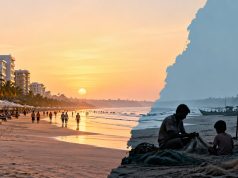

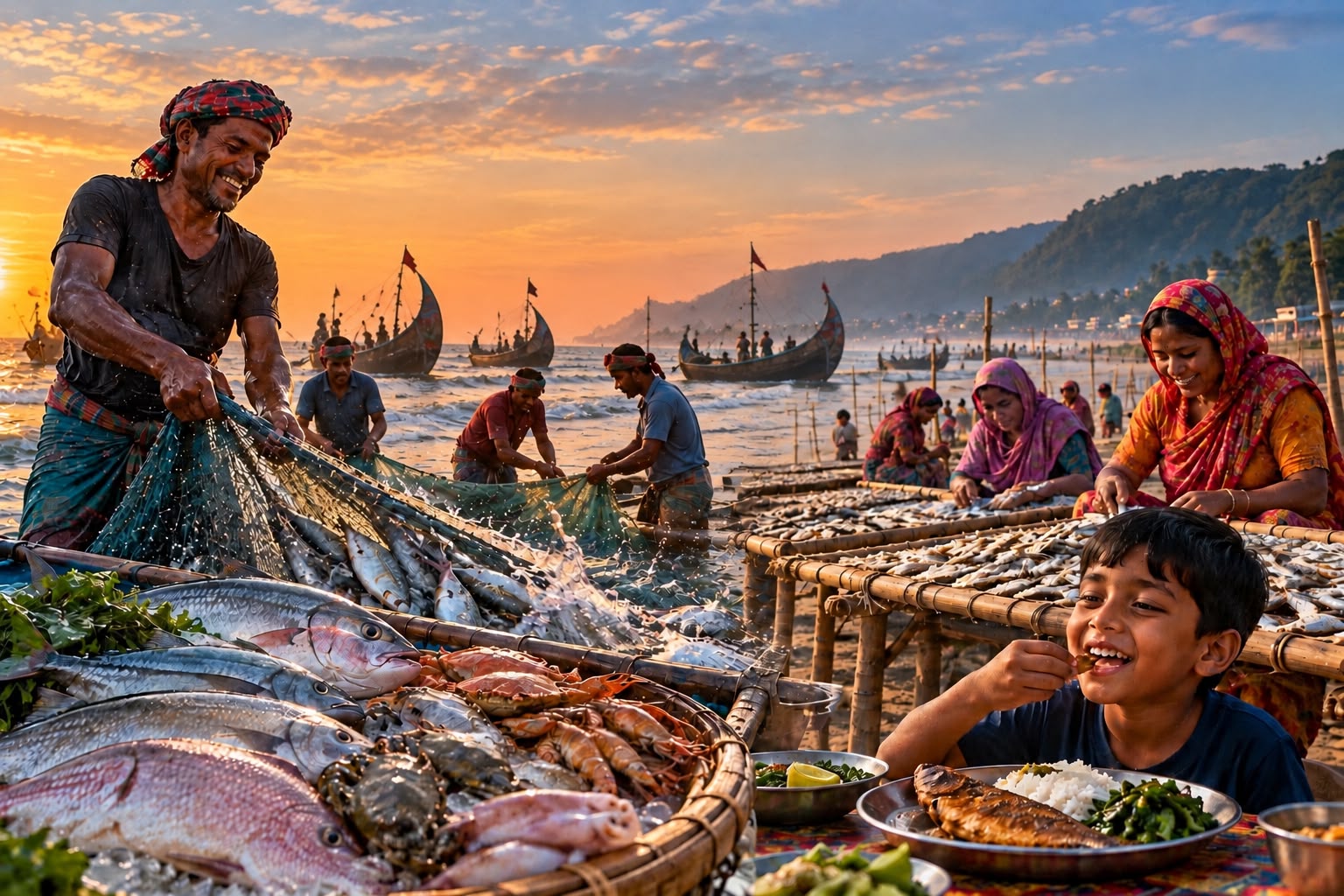
Today, October 16, is World Food Day. It is a day to rethink the Bay of Bengal’s role in feeding a growing population. Farmland has fed us for centuries. But when it comes to protein, we cannot ignore the sea. “From sea to table” is about more than food. It is about Bangladesh’s blue economy and what it could become.
The Bay of Bengal is rich in fish and other marine life. According to the Department of Fisheries, Bangladesh produced about 629,000 metric tonnes of marine fish in 2023–24. In 2024–25, that dropped to nearly 568,000 tonnes. This downward trend is worrying, though we need more research to know why.
Hilsa, pomfret, tuna, ribbon fish, Bombay duck and croaker are well known. Crab, lobster, squid and edible seaweed are also opening new markets. In Cox’s Bazar, fishing, processing and dried fish work support thousands of families, many of them women. If we train local fishers, ensure fair prices and help small entrepreneurs, the benefits will spread further.
Marine fish is rich in protein. It provides easy-to-digest protein, Omega-3, vitamin D, and minerals that support the heart, bones, and brain. Iodine supports thyroid function. If this food reaches people at affordable prices, it can help fight malnutrition.
But the journey from catch to table still has gaps. Lack of cold storage, safe processing and reliable transport causes waste. Fishers and consumers both suffer. Better infrastructure at Cox’s Bazar’s landing centres and dried fish areas would protect quality and raise incomes.
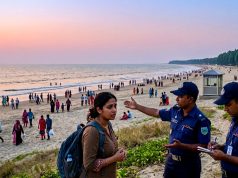
Climate change, harmful nets, overfishing and plastic pollution are damaging the marine ecosystem. Tourist waste on Cox’s Bazar beach must be controlled. The administration, businesses and tourists all have a duty. We must enforce the Marine Fisheries Act 2020, the Harvesting Policy 2022 and the Rules 2023. The 58-day fishing ban from April 15 to June 11 must also work, alongside science-based conservation and support for fishers’ livelihoods.
Experts say sustainable management could grow the current $6 billion marine economy to $18 billion a year. World Food Day reminds us that the Bay of Bengal is not just a food source. It is a chance for nutrition, jobs and prosperity. If we protect nature and improve every step from sea to table, we can build a more self-reliant, prosperous Bangladesh—free from hunger and malnutrition.
By Salam Abu
Editor