
In Cox’s Bazar, paan (betel leaf) is more than just a mouth freshener — it is a living part of the region’s culture and heritage. Locals often describe the art of preparing paan as a form of craftsmanship. Among the many styles, one stands out for both its aesthetic appeal and cultural resonance: the “Paaner Bira.”
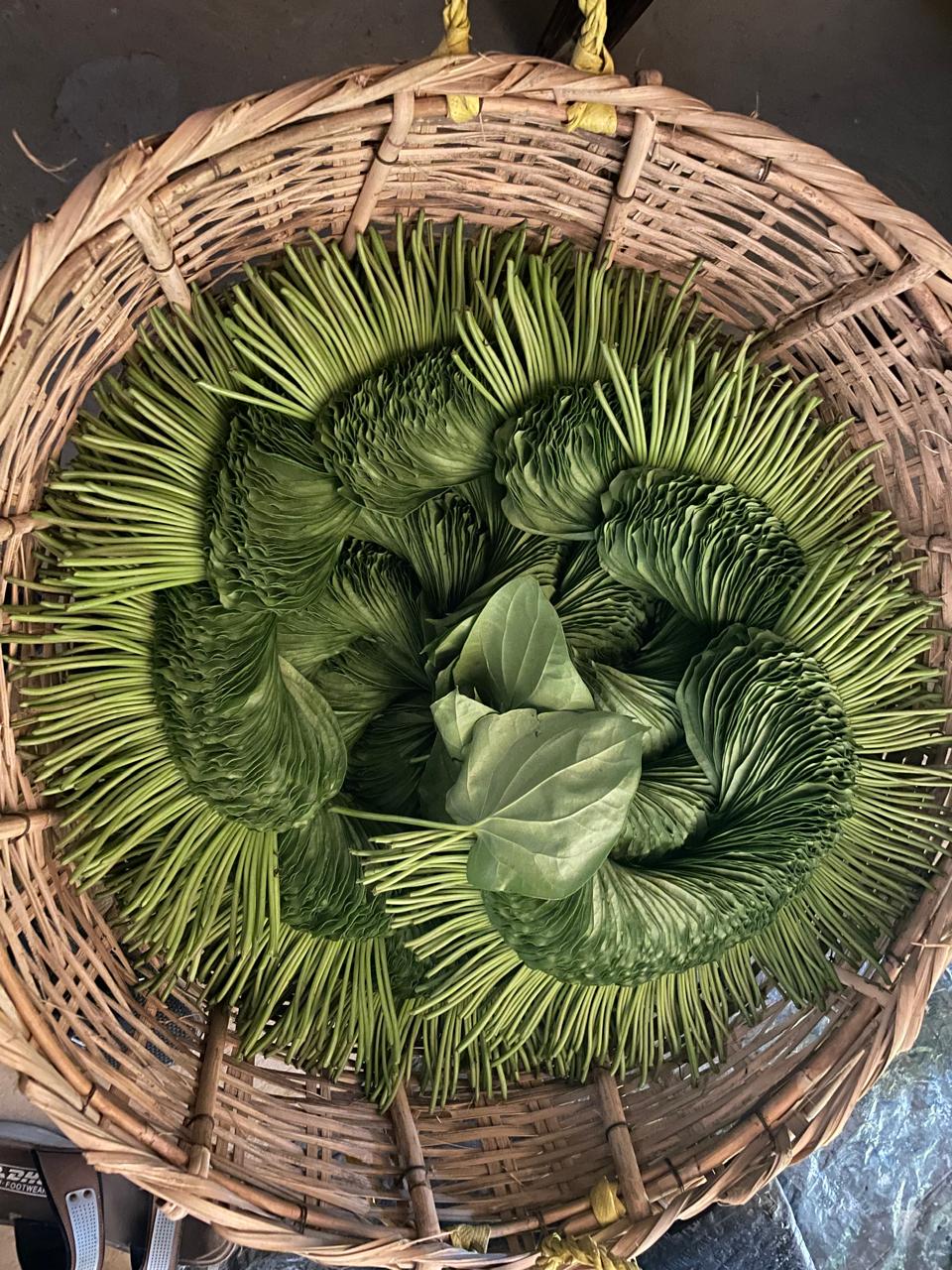
A bira refers to an arrangement where several paan leaves are carefully stacked and aligned to form a distinct, curved structure. Each leaf must be uniform in size and meticulously placed to achieve the perfect symmetry. The result is not only visually striking but also highly valued in local markets.
Paan holds both cultural and economic significance in Cox’s Bazar. Cultivation is spread across almost every upazila of the district, with Maheshkhali being particularly renowned for large-scale production. Farmers there maintain dedicated paan gardens, supplying not only local demand but also sending their produce to other parts of the country.
“The demand for Cox’s Bazar paan has grown beyond our district. Wholesalers from outside now come directly to place orders,” said Mohammad Alam, a local paan grower.
The region’s fertile soil and favorable climate make it ideal for paan cultivation, contributing to its distinctive taste and quality. As a result, Cox’s Bazar paan is considered superior in both flavor and freshness.
Paan continues to play a crucial role in hospitality even outside of trade and agriculture. From rural gatherings to city markets, roadside paan stalls offer a variety of flavors, with bira being the centerpiece attraction.
Thus, paaner bira not only strengthens the agricultural economy but also stands as a cultural emblem of Cox’s Bazar. Locals believe that its popularity will only grow with time, preserving a tradition that beautifully blends taste, artistry, and heritage.
By Abdu Rashid Manik
Photo: Abdu Rashid Manik