
As Bangladesh’s power sector faces pressure from fuel shortages and rising dependence on imported energy, the country’s largest wind power plant in Cox’s Bazar is generating electricity from a resource that is freely available along the coast — wind.
The 60MW Cox’s Bazar Wind Power Plant uses coastal winds to generate renewable electricity without relying on gas, LNG, oil or coal. The plant feeds its electricity into the national grid, helping meet demand while reducing dependence on conventional fuels.
The project was officially inaugurated on October 12, 2023, after beginning trial generation on May 25 that year.
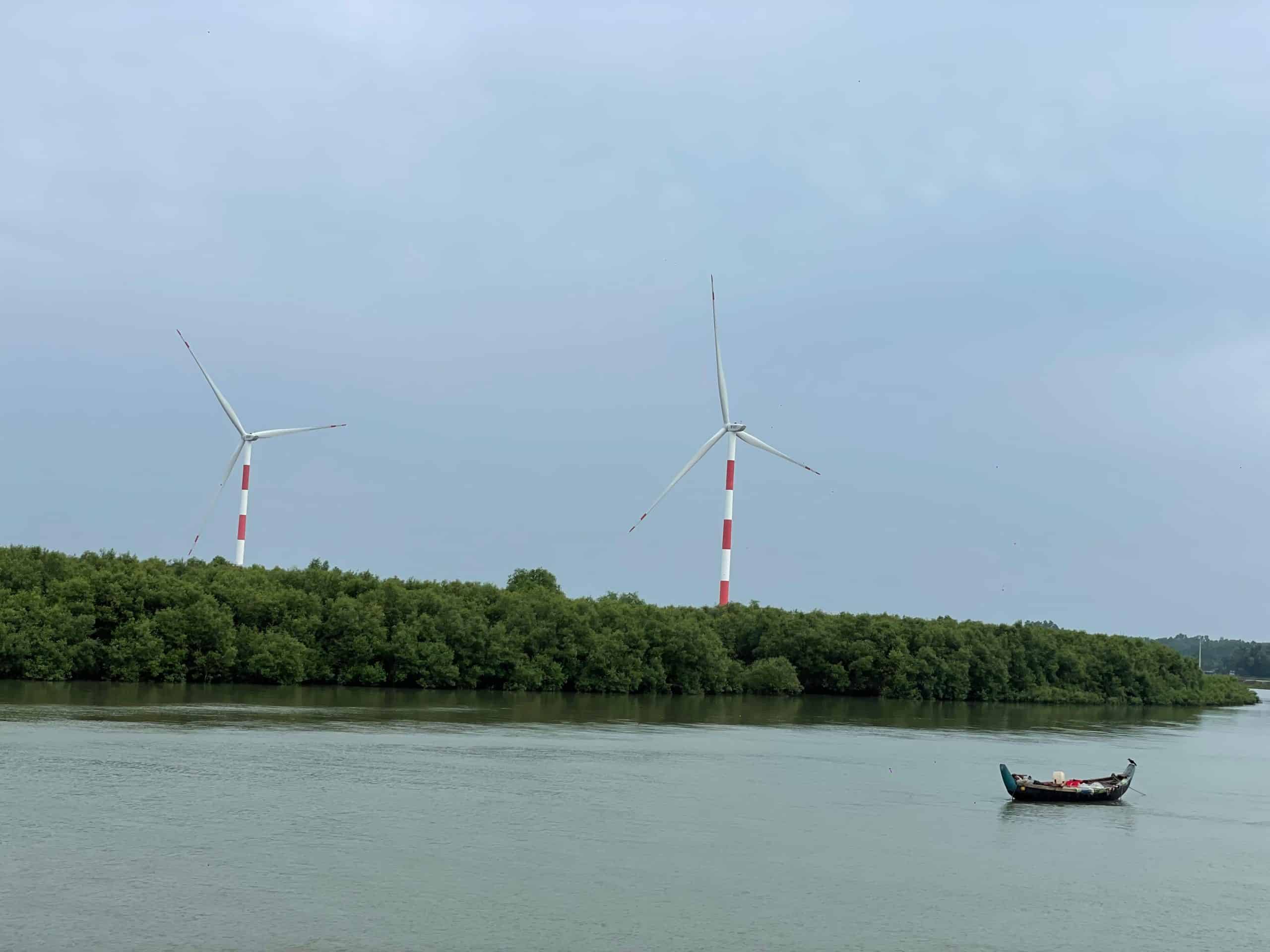
Twenty-two modern turbines are currently generating electricity across four areas — Khurushkul, PMkhali, Choufal Dandi and Pokkhali. Seven turbines have been installed in Khurushkul, three in PMkhali, 10 in Choufal Dandi and two in Pokkhali.
Each turbine stands about 90 metres tall.
Since generation began, the plant has produced around 238.5 million kilowatt-hours of electricity up to March this year, according to project authorities.
“Our basic fuel is wind. We generate electricity using natural wind and do not need LNG, gas or fuel oil,” said Enamul Haque, site manager of the 60MW Cox’s Bazar Wind Power Project.
“Generation depends entirely on wind speed. When there is sufficient wind, the plant remains operational and electricity generation continues,” he said.
He said the turbines begin rotating when wind speed reaches around three metres per second.
However, generation declines somewhat during winter when wind speeds fall, he added.
Manik Ahmed, a shift-in-charge engineer at the project, said generation could fall to between 5MW and 10MW during winter, but the plant does not shut down completely.
“It continues to supply electricity to the national grid,” he said.
Forty transmission towers have been installed between the Khurushkul substation and the Jhilongja National Grid Station to transmit electricity generated by the plant to the grid.
The project has also drawn attention from environmental activists who see wind power as an alternative to imported fossil fuels.
Ruhul Amin, a young activist and teacher, said that coal-fired power plants depend on imported coal and therefore face risks if imports are disrupted.
“Cox’s Bazar has many areas suitable for wind power generation. More such projects can be developed there,” he said.
Nazrul Islam, organising secretary of the Cox’s Bazar chapter of Bangladesh Poribesh Andolon (BAPA), described the wind power project as encouraging at a time when the country is experiencing power shortages and load-shedding.
“We want the government to undertake more projects like this,” he said.
The Cox’s Bazar project demonstrates the potential of coastal wind as a renewable energy source. Unlike fossil-fuel-based plants, it does not require a continuous supply of imported fuel to generate electricity, although its output varies with wind conditions.
As the country seeks to diversify its energy mix and reduce dependence on conventional fuels, the Cox’s Bazar plant’s experience could offer useful lessons for expanding wind power in other suitable coastal areas.
By Abdur Rashid Manik
Photo: Abdur Rashid Manik